


How to actually create new habits
In my last post, I talked about trying to build motivation to do my physio exercises. (Update: I’m doing a little better… but still not quite there!) It got me thinking about other ways to increase my chances of sticking to it - because as we’ve learned before, it’s not just about motivation. It’s also about capability and opportunity.
When motivation is low, make it as easy as possible
When motivation dips, one of the best things you can do is make the behaviour as easy as possible - because the easier something is, the less motivation it requires. The easiest behaviours of all are those that have become habits.
What is a habit?
People often think of “habits” as a behaviour which we do frequently. But technically, a habit is something we do automatically, without needing to think. It might be locking the door when you leave the house, flossing after brushing your teeth, or taking your tablets when you sit down to eat. Habits tend to work best for really simple, specific behaviours (think “having a slice of cheese with lunch everyday” rather than “eat more protein”).
How to make a new habit
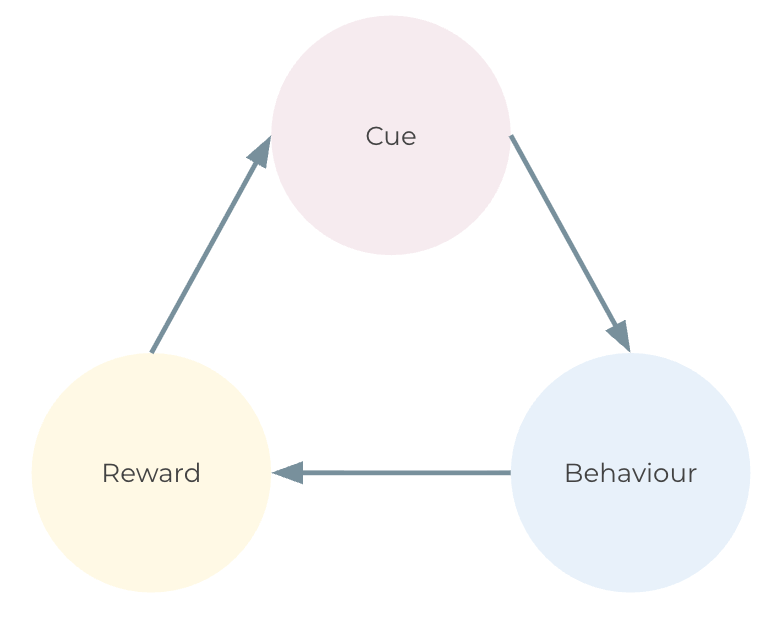
One of the most effective ways to build a new habit is with “if–then” plans. These link a specific trigger (the “if”) with a response (the “then”).
For example: If I’m boiling the kettle to make tea, then I’ll drink a glass of water.
Do this often enough, and you’ll eventually find yourself reaching for the water automatically as the kettle boils - that’s a habit forming. Research shows these kinds of plans are powerful for helping people achieve their goals. Some researchers also suggest completing the loop with a reward: something that feels good and reinforces the new behaviour.
Putting it into practice
So, back to my physio exercises. I realised I needed a clear plan: to decide when I’ll do the exercises, so I don’t have to rely on motivation or memory in the moment.
The app I’m using, PhysiApp, does lots of things (it tracks streaks, times repetitions, offers educational content). But it’s missing one key feature: planning. You can set reminders, but not link exercises to specific daily cues - which would make it so much easier for people to embed them into their routines.
In the meantime, I’ve made my own “if–then” plans:
If I do a morning Pilates session at home, then I’ll spend 5–10 minutes doing some physio exercises.
Reward: I’ll feel good knowing I’ve ticked something off early.
If I’ve been at my desk all day, then when I finish work I’ll do some exercises.
Reward: Moving will ease the stiffness from sitting and help me mentally shift from “work mode” to “evening mode.”
Hopefully, these small plans will help my exercises slot more naturally into my day — even when motivation is low.
Can you really form a habit in 21 days?
People often ask whether it’s true that you can build a new habit in 21 days.
Sadly… no. That “21-day rule” is a myth that originated with a plastic surgeon noticing how long patients took to get used to their new appearance after surgery (which isn’t quite the same as forming a new health habit!)
More rigorous research suggests that, on average, it takes about 66 days to form a new habit - but the range is wide: anywhere between 18 and 254 days.
The real answer is: it depends.
Simple behaviours (like taking a tablet) tend to stick faster
Stable cues (like waking up or brushing your teeth) make things easier.
Complex behaviours or inconsistent cues (like “when I have a gap between meetings”) can take much longer.
How could you use habits to help you change?
What small changes could you use “if–then” plans for?
Think of something simple you’d like to do more often - like drinking more water, or checking in with your hunger and fullness cues. Then, pick a regular cue to pair it with, and repeat your plan to yourself, e.g:
When I’ve half-finished my plate of food, I’ll take a moment to notice how full I am.
You might feel a bit silly saying it - but give it time, and you might just find the new behaviour happens all on its own!

Comments